
Why Does a Dewatering Pump Keep Running?
A dewatering pump may keep running because its float switch is stuck, incorrectly positioned, damaged, or improperly wired. Other possible causes include a faulty control circuit, a failed relay or contactor, an incorrect switch configuration, or a pump-control system that is not responding to the water level.
The first step is to determine whether the pump is running because the water level genuinely requires pumping or because the automatic control system is failing to stop it.
Before inspecting any electrical components, isolate the power supply and follow the manufacturer’s safety instructions.
1. How Does a Dewatering Pump’s Automatic Control System Work?
Dewatering pumps are used to remove unwanted water from locations such as construction sites, excavation pits, basements, drainage sumps, and industrial areas.
Many installations use a float switch to control the pump automatically according to the water level.
The basic operating sequence is:
- Water accumulates in the pit, sump, or collection tank.
- The rising water level moves the float switch.
- The switch changes its electrical state at the designated operating level.
- The pump starts and removes the accumulated water.
- As the water level falls, the float moves to its stopping position.
- The switch changes state again, signalling the pump to stop.
The precise switching sequence depends on the float switch design, wiring configuration, and control circuit.
If the pump does not stop when the water reaches the intended stopping level, one or more parts of this system may not be operating correctly.
2. Common Reasons Your Dewatering Pump Keeps Running
2.1 Float Switch Is Stuck
A stuck float switch is one of the first things to investigate.
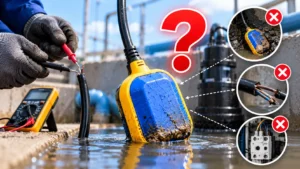
Mud, silt, debris, tangled cables, or contact with the pit wall can prevent the float from moving freely. If the switch remains in the operating position, it may continue signalling the pump to run.
How to identify the problem:
- Observe whether the float can move freely through its intended travel.
- Check for debris around the float.
- Inspect the cable for tangles or obstructions.
- Look for contact between the float and the pump, pit wall, or other equipment.
Solution: Isolate the power before clearing obstructions. Clean the area and reposition the float or cable according to the manufacturer’s instructions. Replace the switch if it is damaged or no longer operates reliably.
2.2 Float Switch Is Positioned Incorrectly
The float switch must be installed at suitable operating and stopping levels.
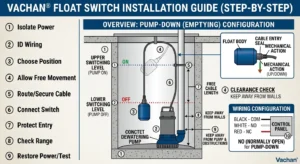
If the switch is mounted too low, too high, or with insufficient movement clearance, it may not switch at the intended water level.
How to identify the problem:
- Compare the installed position with the manufacturer’s recommended arrangement.
- Check whether the float has sufficient room to move.
- Verify the intended start and stop levels.
- Check that the cable length and mounting position are appropriate for the application.
Solution: Adjust the mounting position and cable arrangement in accordance with the switch specifications and the pump manufacturer’s instructions. Test the complete operating cycle before returning the system to service.
2.3 Float Switch Is Damaged or Has Failed
A float switch can deteriorate because of mechanical wear, cable damage, moisture ingress, chemical exposure, or unsuitable operating conditions.
Depending on the failure mode, the switch may remain electrically open, remain closed, or behave intermittently.
How to identify the problem:
- Inspect the float body and cable for visible damage.
- Look for cuts, cracks, or deteriorated insulation.
- Have a qualified technician test the switch contacts using the manufacturer’s prescribed method.
- Compare the switching behaviour with the product’s specifications.
Solution: Replace a defective switch with a compatible unit that meets the required electrical ratings, cable requirements, and environmental conditions.
Do not assume every float switch failure produces the same electrical behaviour.
2.4 Incorrect NO or NC Wiring
Float switches can use different contact configurations, including Normally Open (NO) and Normally Closed (NC).
Incorrect wiring or choosing the wrong contact configuration for the control circuit can prevent the pump from stopping as intended.
The important distinction is that NO and NC describe the contact state in the switch’s defined normal position. They do not independently determine whether the pump should start or stop at a particular water level.
How to identify the problem:
- Check the wiring diagram for the specific float switch.
- Verify the intended function of the control circuit.
- Confirm the connections to the appropriate terminals.
- Have a qualified electrician verify the switching sequence.
Solution: Correct the wiring according to the manufacturer’s diagram and the intended pump-control logic. Do not change terminals based on wire colour alone.
For additional guidance, refer to the related article: Float Switch Wiring Guide: NO vs NC Explained.
2.5 Relay or Contactor Is Stuck
In some dewatering systems, a float switch operates a relay or contactor, which controls the pump motor.
If the relay contacts or contactor remain closed because of a fault, the pump may continue running even after the float switch has issued a stop signal.
How to identify the problem:
- Check whether the float switch changes state at the correct water level.
- Have a qualified electrician verify whether the control circuit responds to that change.
- Inspect the relay or contactor for signs of damage or abnormal operation.
Solution: Repair or replace the faulty control component as appropriate. Do not open or service energized electrical equipment.
2.6 Water Level Is Not Falling as Expected
Sometimes the control system is working correctly, but the water level remains above the pump’s stopping threshold.
Possible reasons include continuous water inflow, inadequate pumping capacity, a blocked discharge line, or a pump that is not delivering its expected flow.
How to identify the problem:
- Observe whether the water level is actually decreasing.
- Check for unusual inflow into the pit.
- Inspect accessible discharge piping for obstructions, following safe isolation procedures.
- Compare the pump’s performance with its specified operating conditions.
Solution: Address the source of excessive water inflow, remove suitable obstructions, or investigate pump performance. If the pump cannot reduce the water level, a qualified technician should assess whether the pump and installation are appropriate for the application.
2.7 Control Circuit or Automatic Mode Is Incorrect
Some installations include control panels, automatic/manual selectors, level controllers, or additional protection devices.
An incorrect selector position, control-system fault, or bypassed control signal may cause the pump to run continuously.
How to identify the problem:
- Check the panel’s operating mode and status indicators.
- Consult the control panel’s wiring diagram.
- Determine whether the pump is operating in manual or automatic mode.
- Have a qualified technician inspect the control circuit.
Solution: Restore the correct operating mode and repair any control-system fault. Never bypass safety devices to force the pump to operate.
3. Troubleshooting Table: Dewatering Pump Will Not Stop
| Symptom | Possible cause | Recommended action |
|---|---|---|
| Pump continues running after water falls | Stuck or incorrectly positioned float | Inspect float movement and mounting |
| Pump runs continuously despite apparent float movement | Failed switch or incorrect wiring | Verify switching operation and wiring diagram |
| Pump continues after a stop signal | Faulty relay or contactor | Arrange electrical inspection |
| Water level stays high while pump runs | Excessive inflow or reduced pumping performance | Check water inflow and discharge conditions |
| Pump behaves inconsistently | Intermittent switch, cable, or control fault | Inspect and test the control system |
| Pump runs in manual mode but not as expected in automatic mode | Control configuration or automatic-control fault | Verify operating mode and control logic |
These symptoms are diagnostic clues, not definitive proof of a particular fault. Multiple problems can produce similar behaviour.
4. Step-by-Step Troubleshooting Procedure
Follow this sequence to identify the likely cause without making unnecessary adjustments.
Step 1: Confirm the Actual Water Level
Check whether the water level is still above the intended stopping point.
If water continues entering the pit faster than the pump can remove it, continuous operation may be normal. If the level is falling below the designated stopping point while the pump continues running, investigate the control system.
Step 2: Isolate the Power Supply
Before inspecting the float, cable, or pump installation, disconnect and isolate the electrical supply using the approved procedure.
Prevent accidental restart and have a qualified person verify that the equipment is safe to inspect. Dewatering pits may also present flooding, confined-space, and other site-specific hazards.
Step 3: Inspect the Float’s Movement
Check for accumulated mud, debris, cable entanglement, or mechanical obstruction.
The float must be able to travel through its intended range without interference.
Step 4: Check the Mounting Position
Verify the float’s mounting height, operating range, and cable arrangement against the product instructions.
Avoid setting the stopping level so low that the pump runs without adequate water, or so high that the pit cannot be maintained at the required level.
Step 5: Verify the Electrical Switching Function
A qualified technician should check whether the float switch changes electrical state at the intended operating positions.
The correct test method depends on the particular switch and control circuit. Ensure that the circuit is safely isolated before testing contacts unless a specific energized test is required under an approved procedure.
Step 6: Inspect the Control Panel
If the float appears to work correctly, investigate the relay, contactor, controller, wiring, and operating mode.
Electrical testing and repairs should be carried out by a qualified professional.
Step 7: Test the Complete Operating Cycle
Once the fault has been corrected, restore the system according to the manufacturer’s procedure and verify that the pump:
- Starts at the intended water level.
- Continues pumping while required.
- Stops at the designated stopping level.
- Does not run dry or cycle excessively.
- Operates reliably through repeated cycles.
Do not leave the installation unattended until its safe operation has been verified.
5. How Can You Prevent a Dewatering Pump From Running Continuously?
Preventive maintenance helps reduce unnecessary operation and unexpected downtime.
Inspect the float switch regularly. Check for debris, mechanical damage, and restricted movement.
Keep the pit and sump clear. Where site conditions permit, remove accumulated material that could interfere with the float or obstruct water movement.
Check cables and mounting hardware. Look for tangles, loose supports, worn insulation, or damaged components.
Verify switching levels. Ensure the start and stop levels remain appropriate for the installation.
Inspect electrical controls. Arrange periodic checks of relays, contactors, control panels, and wiring according to the maintenance schedule.
Use suitable components. Select float switches and related electrical components based on the application, switching requirements, environmental conditions, and equipment ratings.
Maintain service records. Record recurring faults, repairs, component replacements, and unusual operating behaviour.
The inspection frequency should reflect the manufacturer’s recommendations, the severity of site conditions, and how frequently the pump operates.
6. When Should You Replace a Dewatering Pump Float Switch?
Replacement may be appropriate when the float switch has visible physical damage, unreliable switching, damaged cable insulation, or repeated failures despite correct installation and maintenance.
Consider replacement when:
- The float no longer moves freely because of damage.
- The switch fails to change state consistently.
- The cable or enclosure is damaged.
- The switch is unsuitable for the fluid or environmental conditions.
- The existing switch cannot meet the required switching or electrical ratings.
Before selecting a replacement, verify the required contact configuration, voltage and current ratings, cable length, mounting arrangement, environmental suitability, and compatibility with the pump-control circuit.
A replacement should not be selected solely because it looks similar to the existing switch.
7. Choosing the Right Float Switch for Dewatering Pumps
The right float switch depends on the pump installation and the conditions in which it operates.
Important selection considerations include:
- Application: Construction dewatering, drainage sumps, industrial pits, or other water-removal systems.
- Operating range: The water levels at which the pump must start and stop.
- Contact configuration: NO, NC, or another specified control arrangement compatible with the circuit.
- Electrical ratings: Compatibility with the connected load or control equipment.
- Mechanical suitability: Sufficient space for unobstructed float movement.
- Environmental conditions: Exposure to sediment, moisture, temperature variations, and any relevant chemicals.
- Cable and mounting requirements: Suitable cable specifications and secure installation.
For applications involving higher motor loads, the float switch may need to operate a properly rated relay or contactor rather than switch the motor directly. The actual arrangement must follow the equipment ratings and applicable electrical requirements.
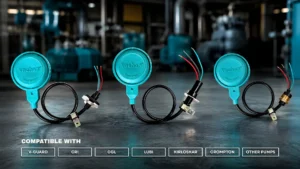
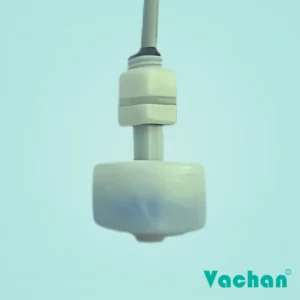
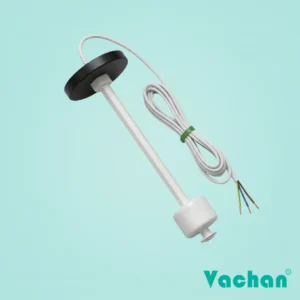
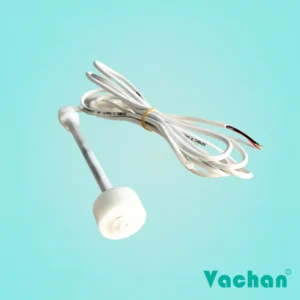
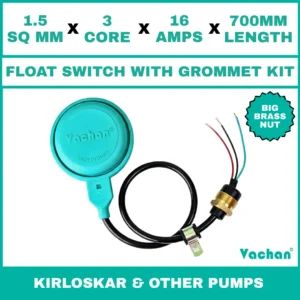
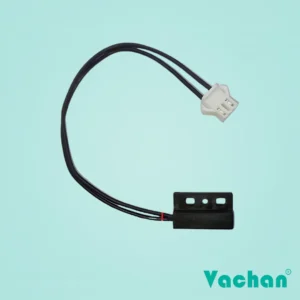
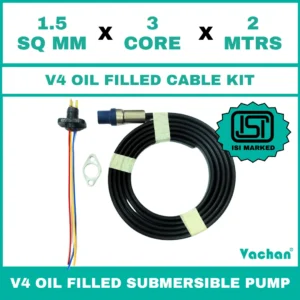
Vachan Float Switch offers products for water-level control applications. Customers should confirm the specifications and compatibility of the relevant product before selecting it for a particular dewatering pump.
8. Frequently Asked Questions
Why does my dewatering pump keep running even when there is no water?
A stuck or failed float switch, incorrect wiring, or a faulty relay or contactor may prevent the pump from receiving or responding to the stop signal. Isolate the power and arrange an inspection before restarting the system.
Can a faulty float switch cause a pump to run continuously?
Yes. Depending on the switch design and failure mode, a defective float switch can leave the control circuit in a state that keeps the pump running. Other control-system faults can produce the same symptom.
Does incorrect NO or NC wiring cause continuous pump operation?
It can. If the contact configuration does not match the control circuit, the pump may not start or stop at the intended water levels. Verify the specific wiring diagram and control logic.
Why does my dewatering pump keep running but remove very little water?
Possible causes include excessive water inflow, a blocked discharge path, reduced pump performance, or an unsuitable pump operating condition. Check the water level and arrange an inspection of the pumping system.
How often should a dewatering pump float switch be inspected?
Inspection frequency depends on the site environment, operating hours, and manufacturer’s recommendations. Installations exposed to heavy sediment or frequent cycling may require more frequent checks.
Can I bypass the float switch to keep the pump running?
Bypassing automatic controls can remove important protections and create risks such as dry running, flooding, or equipment damage. Do not bypass the switch as a permanent solution. Diagnose the fault and restore the intended control system.
How do I know whether to repair or replace the float switch?
If the problem is an external obstruction or incorrect mounting, correcting the installation may be sufficient. If the switch is damaged or fails its specified operating tests, replacement with a compatible component may be necessary.
Can a float switch be used with every dewatering pump?
No. Suitability depends on the pump’s control arrangement, required switching levels, electrical ratings, environmental conditions, and the float switch’s specifications.
9. Related Articles
Continue learning with these Vachan Float Switch guides:
- How to Install a Float Switch: Step-by-Step Installation Guide
- Float Switch Wiring Guide: NO vs NC Explained
Conclusion
A dewatering pump that keeps running may have a simple mechanical obstruction or a more complex electrical or hydraulic fault. Checking the actual water level, inspecting float movement, verifying the mounting arrangement, and examining the control system in a safe sequence can help identify the underlying problem.
Regular maintenance and a correctly selected float switch can support reliable automatic water-level control and reduce unnecessary pump operation.
Looking for a float switch for your application? Explore Vachan Float Switch products or contact the team to discuss your pump’s requirements and identify a suitable solution.